

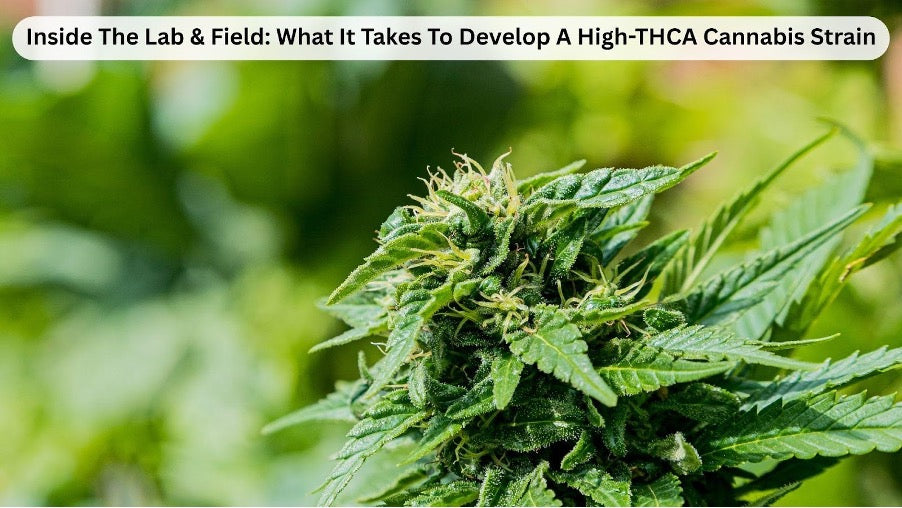
Cannabis cultivation has come a long way in recent months, thanks to a new development of high THCA strains. These select strains are bred to enhance tetrahydrocannabinolic acid (THCA), which is an analogue of THC, i.e., participates in the synthesis of THCA but does not have psychoactive effects.
With consumers increasingly curious about medicinal and legal cannabis, demand is rising for more potent, high-quality strains with high THCA levels. However, it takes much more than just sowing seeds to produce these strains and hope for a big crop. It is a complicated process that intelligently combines scientific accuracy in the laboratory with expert cultivation in the field.
Each stage, from selecting genetics to controlling their environment to testing, is crucial. According to recent agricultural data, licensed cannabis growers now use targeted breeding programs to boost cannabinoid content, a clear sign of how science is transforming cultivation.
Let's look at the science and what goes into growing them.
1. Genetic Selection and Breeding
Every successful high-THCA strains starts with genetics. The DNA of the cannabis plant determines its potential and controls everything from the cannabinoids and flavors it can have to its growth.
Many kinds of plants and their variants can produce cannabinoids. By using selective breeding, breeders try to create a new subspecies of the plant that has the correct genetic potential to produce a high content of THCA.
It does take a few generations of breeding and selection for the desired result.
On top of that, breeding cannabis hinges on genetic testing in the present day. Lab methods can identify plants that have the genes for the expression of high THCA through techniques like DNA sequencing. With this biology, breeders may make early, informed selections while saving both money and time.
Using old and new skills together, breeders use classical horticulture and molecular biology in their work. So, they develop new high-skill strains with excellent delectable traits by involving ecological past and high-tech modern science.
2. Controlled Cultivation Environments
After selecting the right genes, we must create a suitable environment for them to thrive. Cannabis is sensitive to environmental conditions. Just slight fluctuations in temperature or humidity can drastically affect THCA.
Indoor grow operations are highly effective for high-THCA strains, as they allow cultivators to exert complete control. From specialized LED lighting that mimics sunlight to advanced climate control technology, everything is optimized for optimal performance.
Growers must also monitor the balance of nutrients and soil composition. Likewise, high THCA hemp plants need a precisely timed feeding schedule. Excessive or insufficient amounts of a nutrient can disrupt the plant's biochemistry, resulting in reduced yields or potency.
Many growers can take better control of nutrient delivery when using hydroponic or aeroponic systems for their crops. We aim to create a steady, low-stress environment where plants can focus their energy on producing cannabinoids and terpenes.

3. Monitoring Plant Health and Development
To create a high-THCA cannabis strain, one must record data. Farmers closely monitor their plants to identify any damage or diseases that may appear. Even the slightest inconsistency with watering and/or temperature can lessen cannabinoid output.
Growers can make real-time adjustments to optimize conditions by monitoring growth rates, leaf colors, and trichome development. Along with visual inspections, many modern grow operations are utilizing digital sensors and data analytics. These devices can provide you with accurate information about the amount of CO₂, light, and humidity to which the plant is exposed.
Human expertise combined with data-driven precision ensures that every plant achieves its maximum potential. While flowering, great care is taken to check for the maturity of the trichomes. This is when THCA peaks. The buds should ideally be harvested when the trichomes are cloudy and not when they are clear.
4. Laboratory Testing and Quality Assurance
The lab is an integral part of high-THCA cannabis strain development. Back in the lab, each potential cross or variety is tested for what its cannabinoid profile should look like. THCA flower effects levels are determined using High Performance Liquid Chromatography (HPLC), which measures cannabinoids without decarboxylation (the process through which THCA is converted to THC).
Moreover, laboratories do not only test for the potency of cannabis. They also verify the lack of microbes and impurities, including pesticides, mold, solvent residues, and heavy metals. These are all things we do to be safe for you guys and meet regulatory compliance.
Your test results during the developmental period of growth will assist the breeder in understanding how much genetics are influencing cannabinoid production and how much is coming from the way you grow. Test data and research are used by scientists to crossbreed stronger, more reliable strains in the future.

5. Balancing Potency, Flavor, and Stability
Developing a strain is not only about maximizing THCA; there are various other factors to consider. Breeders must ensure potency while also achieving optimal flavor, aroma, and plant stability. A plant with high cannabinoid content is not much good if it is difficult to grow or lacks a rich terpene profile. Breeding terpenes is a delicate process, yet it is what gives each strain its distinctive scent and therapeutic effects.
Strain stability is another major factor. A high-THCA strain must not just exhibit performance in one controlled environment but also maintain consistency over multiple grow cycles. To achieve consistency, repeated tests must be conducted, and the desired characteristics must be genetically fixed. This strain is not only highly potent, but it also comes with all the sensory and therapeutic qualities consumers have come to expect from this type of cannabis.
6. From Lab Innovation to Field Success
Science and agriculture meet when you move from lab research to field production. A controlled environment experimental strain must eventually be scaled up for commercial use. Therefore, growing marijuana outside or in a greenhouse presents other challenges, such as changes in weather or exposure to different pests.
Field tests are a must to understand how high-THCA genetics perform in the field. The data from these tests assist breeders and growers in improving their cultivation processes for superior yields and cannabinoid profiles. Cooperation between lab scientists and field growers ensures that new strains meet potency objectives and can also be implemented and scaled in practice.

Bringing Science and Cultivation Together for the Future of Cannabis
The creation of high-THCA cannabis strains involves both science and art. It requires an understanding of genetics and technology, as well as some hands-on plant skills. Every step taken during parent plant selection and lab testing leads to the production of cannabis with desired potency, which is safe for consumers and of consistent quality.
The purpose of these efforts is not merely to obtain more quantity of cannabinoids but also to recognize cannabis as a credible agricultural and scientific field. As consumers and industries demand more, breeders, researchers, and growers will continue to collaborate to push the boundaries. You will get a new generation of cannabis strains that capture the best of both worlds – science and art.


